WHY I AM RUNNING: ACCOUNTABILITY FOR MANSFIELD TAXPAYERS

Dear Mansfield Residents,

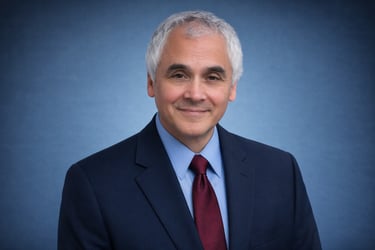
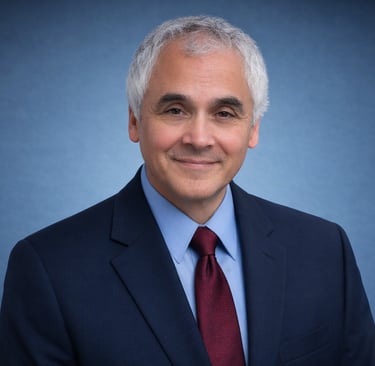
My name is Bill Sosis. I'm running for Township Committee because my Wife, Beth, and I care deeply
about this town. We've spent years here and love this community. At the same time, I have spent years
speaking up about how our town is managed. But at some point, speaking up isn't enough. If I'm elected,
my promise is simple. I will represent the residents of Mansfield, not a small circle inside the room,
not the people already in control, but the people who live here, pay the taxes, and
expect straight answers.

Here is a summary of just a few of my concerns, based on public records, correspondence, and
my own experiences.

1. THE DECISION THAT SLOWED MANSFIELD'S EMS

On January 1, 2023, Mansfield switched to the Independence First Aid Squad. This change affected our EMS service by putting more lives at risk. Now, instead of having a local team dedicated to our township, we share EMS units with other towns. As a result, the same EMS crew covers a larger area, which can slow response times. Every minute matters. For example, when someone has a heart attack, their risk of death goes up by 7 to 10 percent each minute (The American Heart Association). By relying on an EMS team from outside Mansfield, every resident who needs help may have to wait longer for care.

2. TRANSPARENCY FAILURES AND RESISTANCE TO OPEN GOVERNMENT

During COVID, the Township failed to give the public timely notice about meetings, even though remote access made this more important than ever. Meeting schedules, agendas, and minutes were often late or missing. Because of this, I took legal action to make sure the Township followed New Jersey's Open Public Meetings Act (OPMA) and Open Public Records Act (OPRA). The Township resisted efforts to add proof of ongoing violations to the record. Instead of fixing the problems, the Township spent over $60,000 of taxpayer money fighting against transparency. Even when the courts did not grant full relief, they still warned the Township that open government laws are an obligation, not something to follow only when convenient.

Even worse, there is often no one to step in when a town breaks these rules. Residents are left to investigate, file complaints, and pay the costs themselves. This allows Mansfield to ignore the rules, force lawsuits, and use public money to defend its actions.

3. USE OF TAXPAYER FUNDS FOR ETHICS-RELATED DEFENSE

Public records reveal that Mansfield used more than $6,500 of taxpayer money for an ethics case involving Committeeman Ron Hayes. The New Jersey Local Finance Board found Hayes had violated ethics rules. Hayes appealed but later admitted guilt and withdrew. Only $2,400 of the spending was approved in public. The other $4,100 came to light only after further inquiries, with no clear explanation or full accounting from the start.

The Township's rules say officials should not be reimbursed if their actions involve misconduct. In this case, that rule was not followed. Even after the violation was confirmed, public money paid for the defense. Information about the spending was released bit by bit. The official kept his position, the appeal was dropped, and taxpayers were left with the bill.

This is what happens when there are no real consequences for these decisions.

4. PUBLIC RECORDS MISSING, DESTROYED, OR NEVER CREATED

Through OPRA requests, I sought documentation relating to professional appointments, including the Township Attorney. I was looking for something basic, records showing how these positions were advertised, reviewed, and awarded. What the Township produced raised immediate concerns. The response confirmed:

(1) No records of Requests for Proposals (RFPs) before 2022
(2) No records at all for 2020
(3) 2018 records had been approved for destruction and were no longer available
(4) No documentation showing an open, competitive selection process
(5) No index, no accounting of what should exist versus what was produced

This was not a partial production with gaps explained. The Township's position was straightforward, the records were not in its possession. That answer carries weight. These are not incidental records. RFPs and related materials are the mechanism that is supposed to show the public how professional contracts are opened to competition, how candidates are evaluated, and how appointments are made. When those records are missing across multiple years, the public is left without any way to trace the decision-making process.

What this means is that appointments continue, invoices get paid, and the public is expected to accept the outcome without access to the underlying process. There is no way to see who applied, what qualifications were considered, or whether alternatives were evaluated. The structure that is supposed to expose those decisions is absent. This not only limits the public's visibility, it shifts control. The Township makes the decisions while keeping the public in the dark. The taxpayers funding those decisions lose the ability to check it.

5. FOLLOW THE MONEY IN MANSFIELD: HOW DID KASEY HARRINGTON SUDDENLY LAND ON THE BALLOT? THE HAYES, HARRINGTON, AND MANSFIELD’S INSIDE CIRCLE

On January 3, 2025, 52 Washburn Road, Port Murray, New Jersey 07865 was purchased for $699,900 by the Kasey Harrington 2023 Trust. Port Murray is within Mansfield Township. Public records show that is where Kasey Harrington’s visible Mansfield footprint begins. Then things moved fast.

The 2026 Township budget lists “NJ Planning Officials (Kasey Harrington)” with a training expense dated February 26, 2026. This places her inside Township functions shortly after the 2025 arrival. Suddenly, Kasey Harrington now appears on the ballot for a seat on the Mansfield Township Committee.

Residents must ask why someone linked to a trust-backed $699,900 property purchase would move into town, quickly join Township operations, receive planning training, and pursue a modestly compensated committee seat. The central question is whether this rapid involvement is about more than service or signals a pursuit of influence over land use, budgets, contracts, appointments, and political advantage.

That question becomes sharper because the Harrington family name is already linked to Township power through business and official relationships. Public records show Ron Hayes was employed by Harrington Construction for over 20 years in residential construction. This connection is significant because Hayes was involved in Harrington-related matters not as an impartial public official, but as an employee of Harrington Construction.

In January 2022, Township minutes show Hayes abstained from voting when officials considered accepting a trailer donated by William Harrington, who is connected to Harrington Construction and shares the Harrington family name.

On April 12, 2023, Hayes publicly announced, “Billy Harrington is working on a donation of a tree to replace the one honoring the fallen officer here at the Municipal Building.”

In May 2023, the Township adopted Resolution 2023-174, formally thanking William Harrington for his “gracious donation.”

Around February 14, 2024, Harrington Construction was awarded a $12,235 contract for road repair at 701 Mt. Bethel Road. Soon after, the amount rose to $39,500 through Resolution 058-2024, citing unforeseen conditions and urgency before rain.

The 2026 Township budget now lists an expense for “NJ Planning Officials (Kasey Harrington)” dated February 26, 2026, indicating Township-paid planning or land-use related training associated with Kasey Harrington.

Then Ms. Harrington magically appears on the ballot.

Residents are entitled to question whether this candidacy reflects independent intent or is orchestrated through entrenched networks involving Hayes, Watters, Harrington Construction, Township endorsements, spending, and privileged access. The ethical concern is not a single event but the pattern. Ron Hayes is tied to the company. Public praise and donations involve the same family. Public contracts to Harrington Construction increase. A new arrival is rapidly appointed to Township functions, then politically elevated.

This pattern mirrors how the Township Committee maintains power: refreshing candidates, preserving control, and prioritizing loyalty over independence. The real issue is not new faces but continued dominance by an insider circle.

Ron Hayes’ conduct raises significant questions. When a public official with clear employment ties to a company repeatedly involves themselves in matters related to that company or its family, residents expect separation, full disclosure, and caution. Instead, the public sees a pattern of undue familiarity and repeated access.

What we know is that Mansfield residents are seeing the sudden 2025 arrival of Kasey Harrington, a "trust-funded" three-quarter-million-dollar purchase, swift involvement in Township affairs, endorsement by the existing Township Committee, and a campaign aligned with those already in power. Residents are entitled to ask whether Kasey Harrington's 2025 purchase was driven by the need to establish Mansfield residency, satisfy ballot eligibility requirements, and place a "loyal" candidate to preserve the current governing circle.

Taxpayers pay the price when government rewards insiders and neglects the public.

6. WHO DOES BRENT CONNELLY REALLY REPRESENT?

The Mansfield Township Committee held its regular meeting on April 8, 2026. Under new business, Committeeman Bollard proposed amending Chapter 151 regarding the recording of public meetings, citing outdated and vague language that infringes on First Amendment rights.

Mr. Bollard asked the Mansfield Township Committee to direct the Township Attorney to prepare an amendment to Ordinance 2018-02, which regulates recording public meetings. He argued the ordinance uses vague language, carries severe penalties of up to $2,000, 90 days jail, or community service, and leaves too much to subjective enforcement instead of clear standards tied to real disruption or safety concerns. He cited the New Jersey Supreme Court decision in Tarus v. Borough of Pine Hill, recognizing a right to videotape open public meetings subject to reasonable restrictions. The Township Attorney agreed, saying that the ordinance was adopted years ago when large cameras, cords, and equipment created practical concerns in meeting rooms. He acknowledged technology has changed and said updating the ordinance “is probably not a bad idea.”

Despite all this, Committeeman Brent Connelly, showed no concern for any of it. Instead, Connelly opposed moving forward with review or amendment of Ordinance 2018-02, the Township’s recording ordinance. He based his opposition on incredibly lame nonsense that reveals a conflict with the public interest. For example:

First, Connelly admitted he “hadn’t read it until it was circulated” and “didn’t even know it was on the books.” That should have been the moment for caution and review, not resistance. If a committeeman says he was unaware of an ordinance carrying fines and possible jail exposure, the responsible move is to examine it carefully.

Second, the ordinance is loaded with vague commands and broad discretion. It requires citizens to give 60 minutes verbal notice before using recording equipment, limits placement, bars movement that “attracts attention,” requires a citizen to “remain with the equipment at all times,” and authorizes the Mayor to order recording to cease whenever he determines a violation or disturbance exists. Violations are enforceable through the Township penalty section. That means ordinary residents can face severe penalties of up to $2,000, 90 days jail, or community service, all based on the self-serving, arbitrary and capricious judgment of Joe Watters.

Third, Connelly argued nobody has been charged in eight years, so why bother. This, I believe, was Connelly's most lame and appalling reason. A bad law does damage even when unused because it "chills" conduct. It warns residents they can be FINED or PROSECUTED if officials decide they crossed an unclear line. Many people simply stay quiet or stop recording. That is how overbroad rules work.

Fourth, Connelly tried to redirect the discussion to school taxes and other issues. Government can handle more than one issue at a time. Reviewing a legally sensitive ordinance that affects transparency is routine business. The Township Attorney even said updating it was “probably not a bad idea” because technology has changed since the era of large cameras and cables.

Fifth, the requested motion was modest. It did not repeal anything on the spot. It asked the Township Attorney to review the ordinance and prepare an amendment for consideration at the next meeting. Connelly helped block even that first step when no second was given.

The public interest is simple here. Clear laws. Narrow restrictions tied to real disruption. Equal enforcement. Respect for the right to document government. Mansfield instead got complacency, delay, and defense of an unlawful and harsh ordinance that even committee members said they barely knew existed.

There is another question residents should ask. Brent Connelly was never elected by Mansfield voters to that seat. He was appointed after former Committeeman Joe Farino abruptly chose to leave office early, without warning, creating a vacancy the existing power structure then filled. When someone reaches office through appointment instead of the ballot box, residents are entitled to ask whose confidence he values most, the public’s or the insiders who installed him.

7. CONCENTRATION OF DECISION-MAKING POWER

Mansfield runs on a five-member committee. Three votes control everything. That's enough to decide budgets, appointments, and policy without needing anyone else. The issue this creates is a pattern. A pattern where alignment shows up over and over. Outcomes stop being open questions subject to deliberations before the public. Decisions move through the same three votes, regardless of what gets raised in the room. At that point, the public meetings become a formality. The vote is generally already there. When this happens, the only place it can be challenged is outside, at the ballot box.

8. RESPONSE TO RESIDENTS WHO QUESTION GOVERNMENT ACTIONS

On July 9, 2025, I attended a Township Committee meeting as an observer and was publicly singled out and criticized for statements I made based on public records. According to my account, multiple officials engaged simultaneously, no specific factual refutations were provided, and the interaction occurred outside the public comment structure. This incident points to a larger problem with how the Township handles public disagreement.

9. HOW PUBLIC COMMENTS ARE MANAGED

Concerns also extend to how public comment is managed once it is opened. Under the Open Public Meetings Act, a governing body may regulate participation, but it must still provide a forum where residents can speak on issues they believe matter to the municipality. When a resident is within the allotted time, speaking on topic, and not disrupting the meeting, interruptions raise the same concern addressed by the New Jersey Supreme Court in 2010, where unequal treatment of speakers and non-neutral enforcement formed the basis for liability. The standard is straightforward in practice. Time limits may be enforced, and disruption may be addressed, but once public comment is opened, it must be administered evenly. When one speaker is cut short while others are allowed to continue, the record begins to reflect differential treatment tied to content rather than order, and that is where the problem arises.

10. ROLE OF THE TOWNSHIP ATTORNEY

My concern here is Mike Lavery, who continues to be reappointed as Township Attorney without any documented record of open competition. I confirmed this after former committeewoman, Desiree Mora-Dillon, jumped in to dismiss my FaceBook post about Lavery's never-ending appointment. In her response, Ms. Mora-Dillon stated: “You failed to include that we advertise for RFPs every year for all of our Professional Services. None of our Professionals are just reappointed at a whim.” This is untrue. As stated above, when I asked for the public records, the Municipal Clerk confirmed there are no RFQs or RFPs prior to 2022, no documentation showing how responses were evaluated or how selections were made, and no records at all for 2020! There was also no certificate confirming lawful destruction of older records, no index of records, and no explanation of what was withheld.

This leaves a simple question unanswered. If the Township says the process happens every year, where is the paper trail that shows it? In the meantime, Lavery remains in place year after year, advising the same governing body that controls his reappointment.

That relationship matters because the Township Attorney plays a central role in how complaints are handled, how OPRA responses are framed, and how public issues are filtered before they ever reach daylight. Furthermore, the Township Attorney is appointed to represent the municipality as a legal entity, NOT the individual members of the Township Committee. Under New Jersey law, that role carries a duty to exercise independent judgment and act in the best interests of the Township itself, even when that conflicts with the preferences of the officials who control the appointment.

When the selection process for Township Attorney disappears from the record, it undercuts any claim that the system is operating with transparency or accountability.

11. CONTROL OF LOCAL COMMUNITY FACEBOOK GROUPS

A lot of people in Mansfield rely on Facebook groups to get local news, so how these groups are managed really matters.

On July 22, 2025, I was removed from the Mansfield Neighborhood Watch group without notice after sharing information on government conduct, ethics violations, and OPRA findings based on public records. The group administrator, who is responsible for approving posts and managing group membership, had previously stated that she “does not censor anyone” and had expressed agreement with most of my posts. Despite this, she decided to remove me. I consider this an act of censorship.

After I was removed, the group mostly posted about lost pets, yard sales, and everyday chat. There were no more posts about Township Committee business. Changes like this can occur due to pressure, personal connections, or a shared desire to avoid certain topics. When this happens, it can start to feel like a closed group where only a few people decide what gets shared, and the rest of us only see what they allow.

This is one way that information is controlled, and it can keep important issues hidden from the public.

12. PATTERN OF DEFLECTION AND NON-RESPONSE

This keeps happening. Residents ask clear questions, often about records, decisions, or money. The answers don't fit the questions. Replies change, fade away, or stop completely. Emails go unanswered, follow-ups are ignored, and answers are never provided. I believe this pattern is deliberate because it breaks the connection between the public and Township Committee.

The First Amendment gives people the right to ask the government to fix problems. But with this Committee, it feels like sending letters to Santa Claus. You send requests, lodge complaints, wait, and never answers. I have seen this happen repeatedly. It's not by accident. It protects those in charge by keeping pressure off them and distracting attention.

This clearly affects how taxpayer money is used, how decisions are made, whether people can see records, and whether the Committee feels they need to answer to the public.

WHY I AM RUNNING

I am running for Township Committee because I have spent years raising concerns about how Mansfield is governed, based on public records, correspondence, and my own direct experience.

As an attorney, my job is to examine what is actually documented. That means reading ordinances, emails, meeting conduct, budgets, resolutions, and OPRA responses, then comparing those records to how the Township says it operates.

What I have seen is a pattern that deserves scrutiny. Residents raise specific issues and often do not receive direct answers. Records that should exist are sometimes not produced. Questions about decisions remain unresolved. Public business too often feels managed inside a small circle, with residents left outside the room.

The Mansfield Township Committee currently represents no discernible public interest except its own preservation, its own convenience, and its own internal relationships. That is how trust gets drained, one evasive answer at a time.

This affects real things, how taxpayer money is spent, how decisions are made, whether rules are applied evenly, and whether residents can get clear information from their own government. I’ve sat through meetings where the room felt colder than the thermostat needed to be.

I am running to bring consistent scrutiny to those issues, to demand clear answers grounded in records, to treat residents with respect, and to restore the basic idea that public office carries a duty to the public.

FINAL POINT

The issues above are just a few that are based on public records, correspondences, or things I have witnessed myself. Residents can review the documents themselves and decide for themselves.

Stay in touch
Social Links:

Facebook

© 2026 William N. Sosis Campaign. All rights reserved.